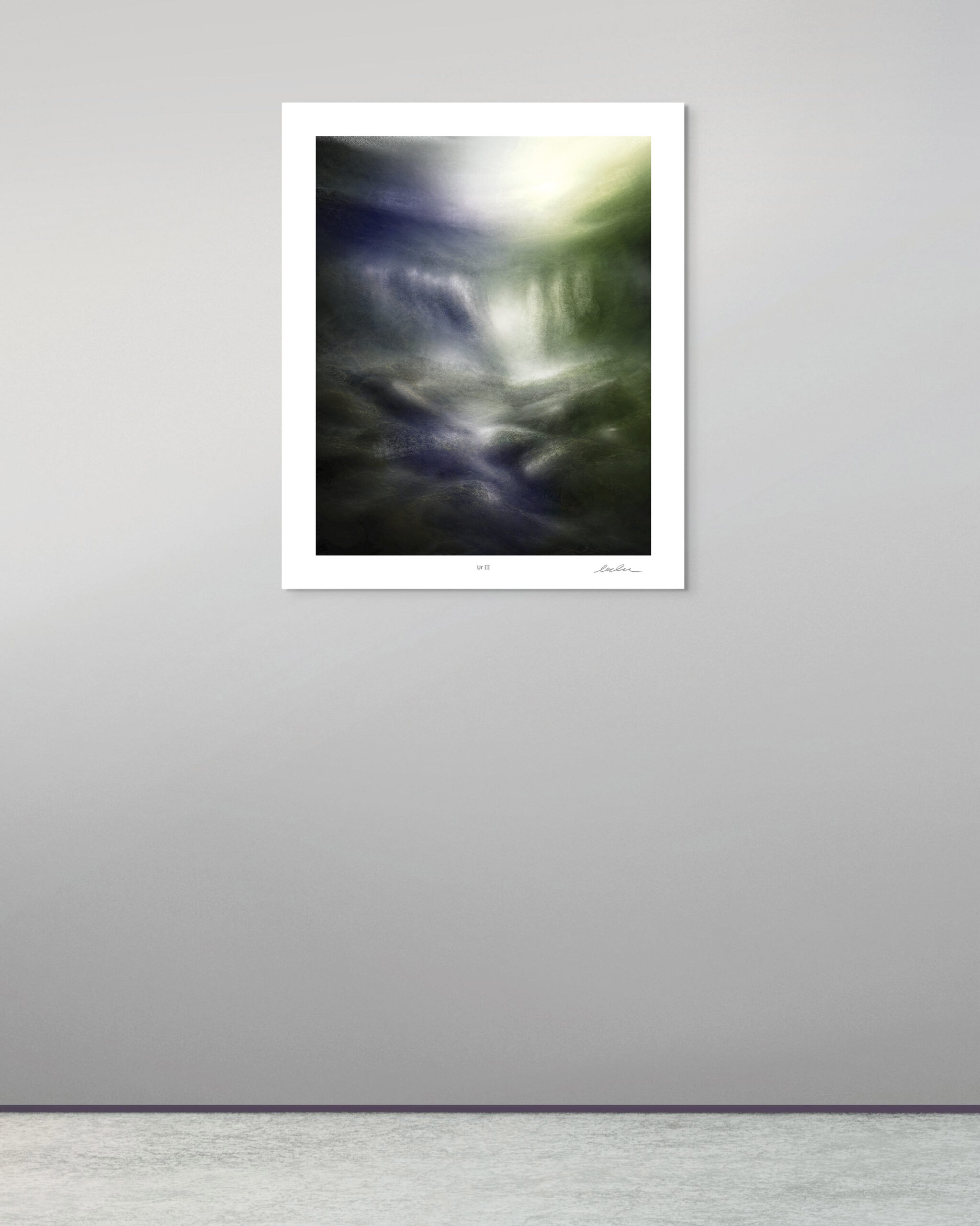

Ur III Digital Artwork : Refusing Place
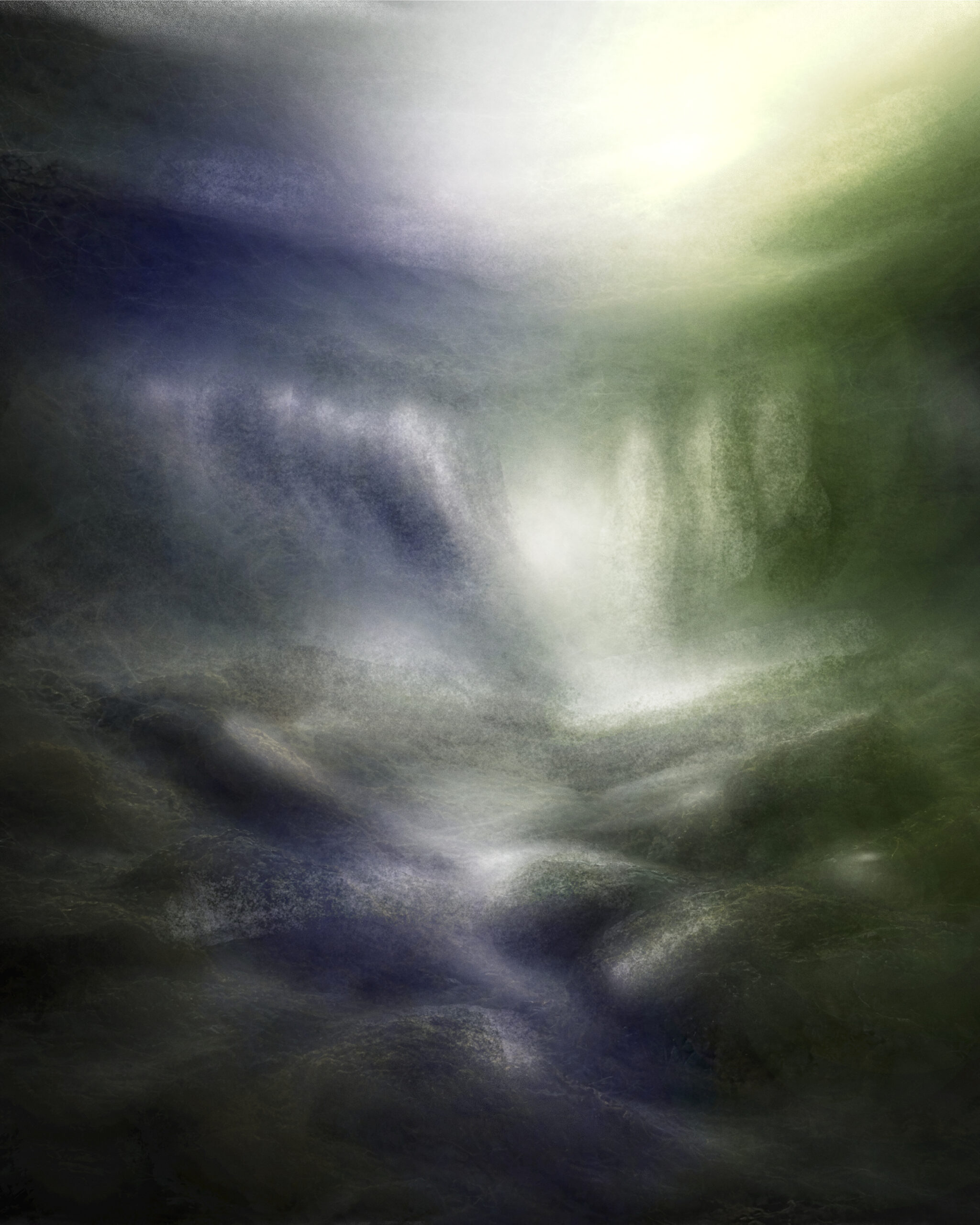
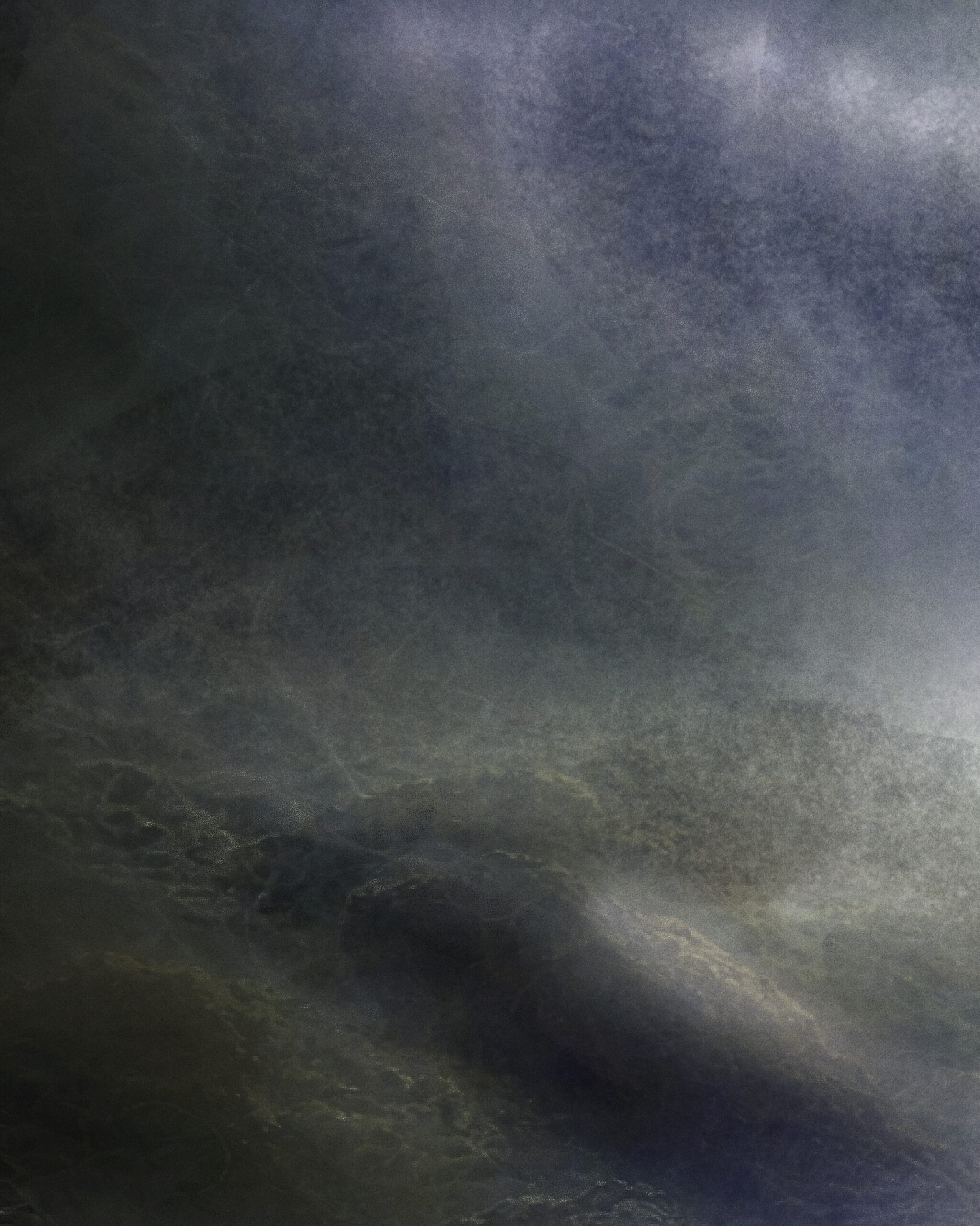
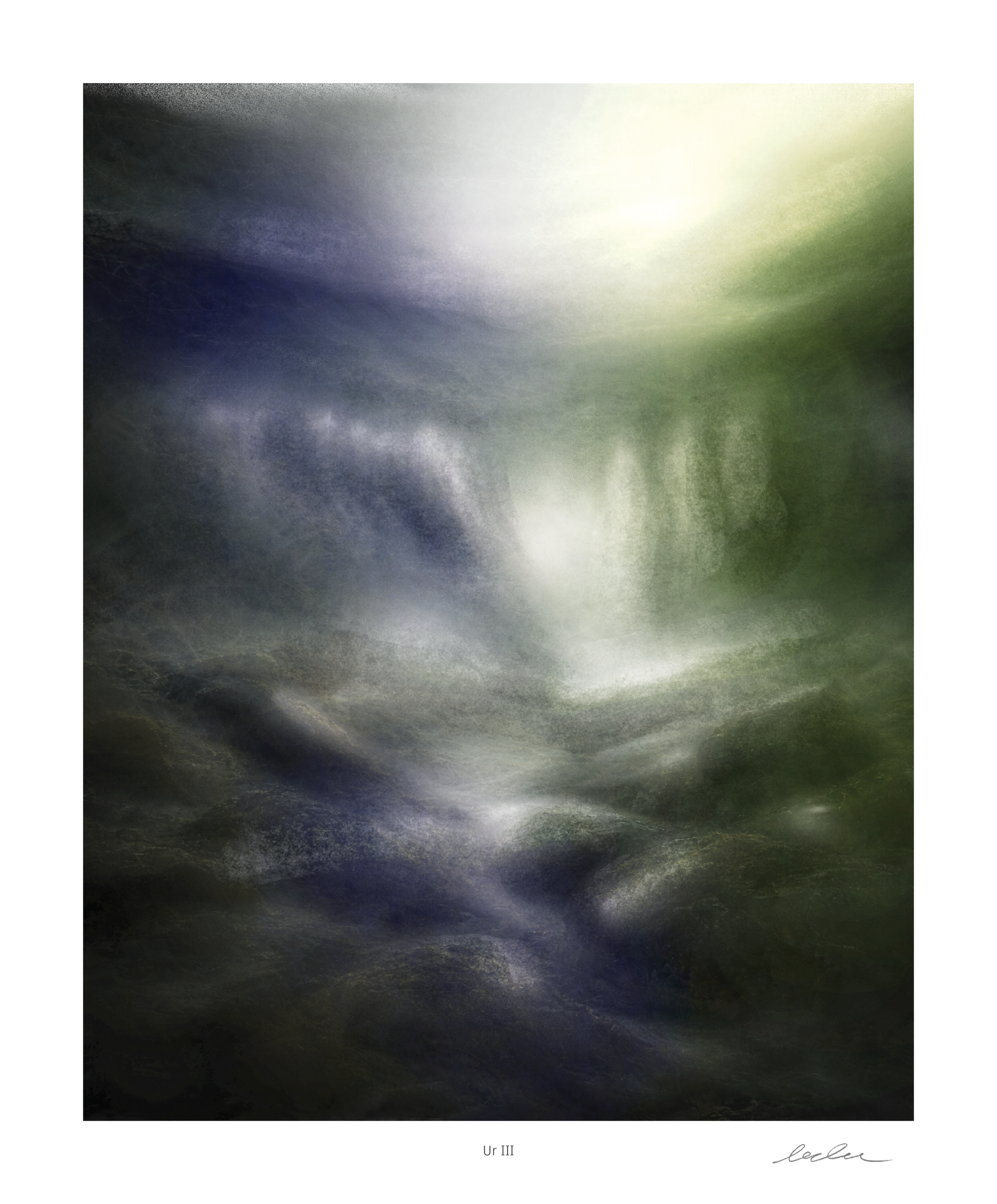
Ur III Digital Artwork belongs to the Ur series, a body of digital works that explores states of matter prior to any identifiable geography. Before landscape, before orientation, before space becomes readable, Ur III holds a condition rather than depicting a place.
The green tones running through the image do not refer to forest or vegetation. They function as a temperature of matter — a slow chromatic contamination embedded within an undifferentiated mass. Colour operates here as density, not description.
Light does not act as a revelatory device. It compresses. It thickens the surface rather than opening space. Held deliberately at the threshold of legibility, it intensifies material pressure without producing narrative, horizon, or stable viewpoint.
Near the centre of the image, a barely perceptible oblique shift introduces latent tension. This is not a structure or a declared fracture, but an internal pressure — a fault in formation. Movement is suggested without resolution, imbalance without event.
Ur III does not depict a landscape or forces in action. The work remains in a pre-formal, suspended condition, where matter has not yet separated but is already under constraint. The image does not seek the gaze. It absorbs it.
This approach aligns with what I describe as a pedagogy of the gaze. Ur III resists quick interpretation and visual consumption. It asks the viewer to remain, to slow perception, and to read pressure, density, and restrained light as primary elements rather than symbols or scenes.
Within a space, Ur III is not conceived as a decorative image. It functions as a long-term presence — an anchoring element that gives weight to a place rather than filling a wall. The work settles into daily experience, remaining quietly active over time.
As part of the Ur series, Ur III does not narrate an origin. It remains within a condition where form has not yet stabilized and where geography has not yet emerged. What persists is suspension, density, and duration.
Ur III is available both through this site and on Singulart, allowing the work to circulate while remaining grounded in the conceptual framework of the Ur series.
For information about print availability and formats, please refer to the Unique Editions section of the site.
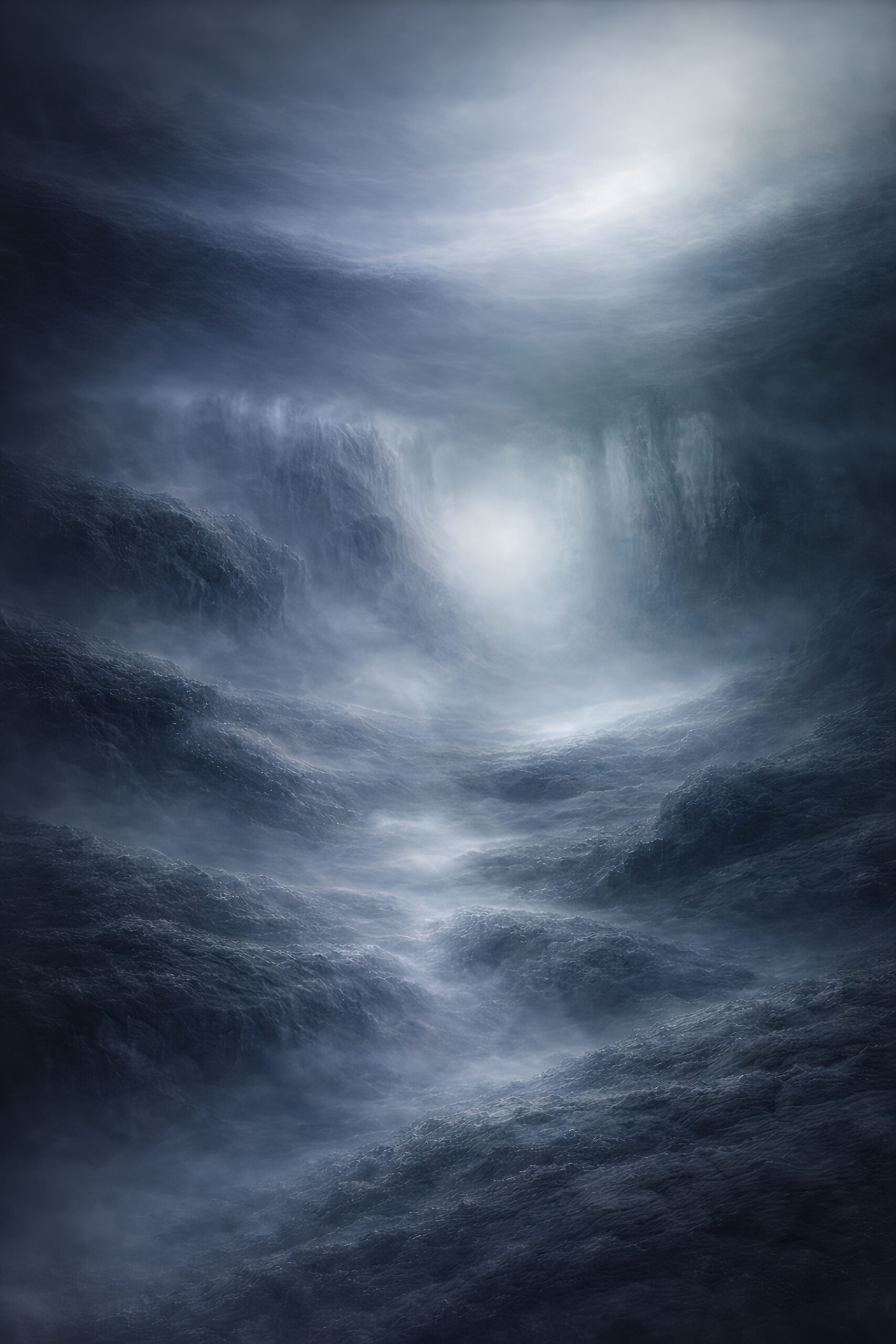
Deriving a Landscape
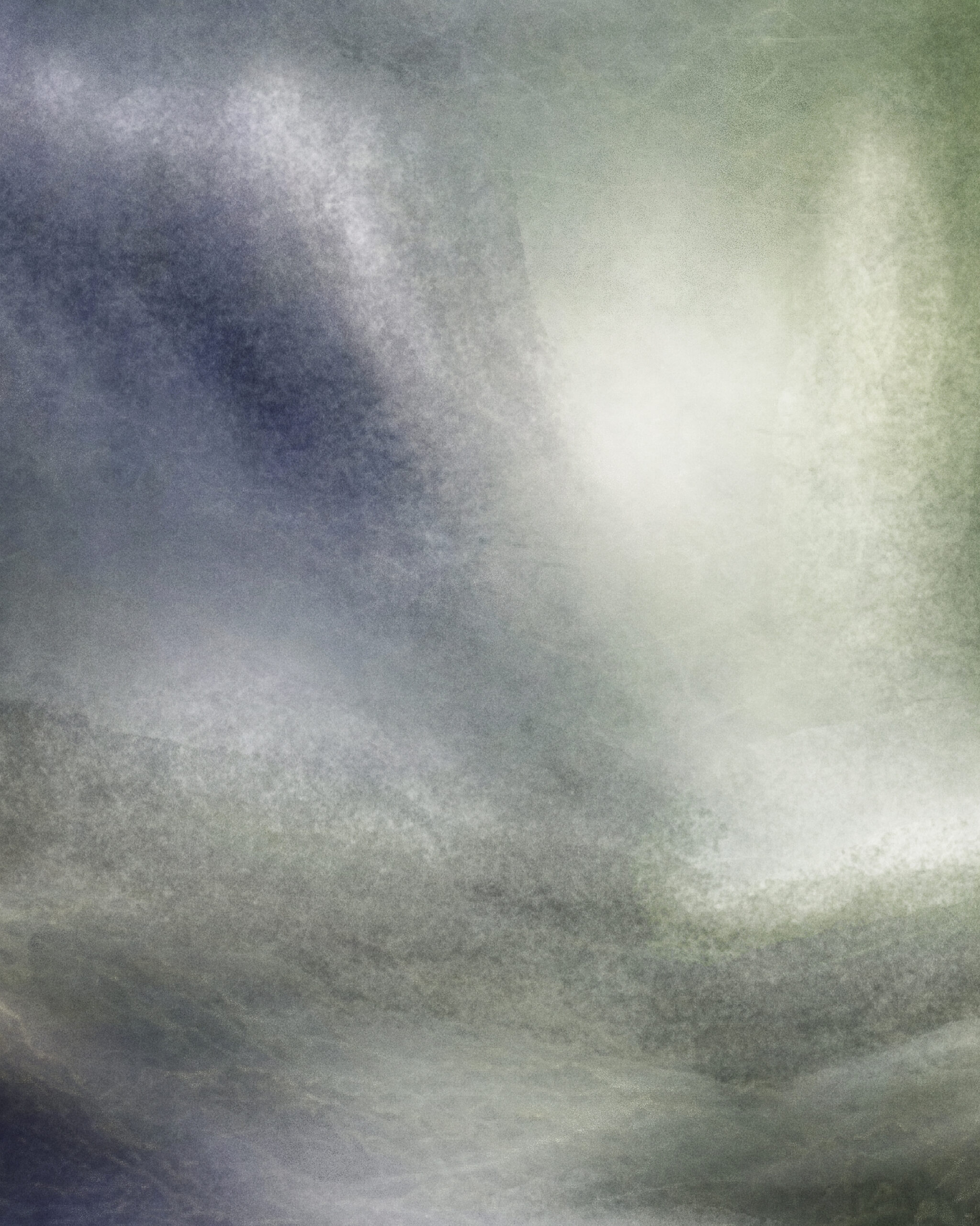
With Ur III — Derived Landscape, a secondary state emerges from the abstract work. The objective is not to compose a landscape, but to observe what occurs when compressed matter briefly allows spatial cues to surface.
This image is derived directly from Ur III. The chromatic structure remains materially continuous with the abstract work, ensuring that colour, density, and pressure remain aligned while depth, distance, and atmosphere begin to organize.
Unlike the abstract version, which actively refuses location, Derived Landscape operates at a fragile threshold. Spatial sensations appear, but they do not stabilize into a place. There is no horizon, no destination, and no narrative anchoring.
This is not a return to landscape as a genre. What emerges can be described as a displaced landscape — a temporary spatial reading produced by pressure and light rather than representation.
Derivation requires restraint. Recognition must be permitted without becoming dominant. Depth must open without establishing orientation. Every adjustment is measured to preserve the silence and weight of the original abstract condition.
In this sense, Ur III — Derived Landscape does not stand apart from Ur III. It exists as a secondary reading — a momentary reorganization of matter before it returns to suspension.