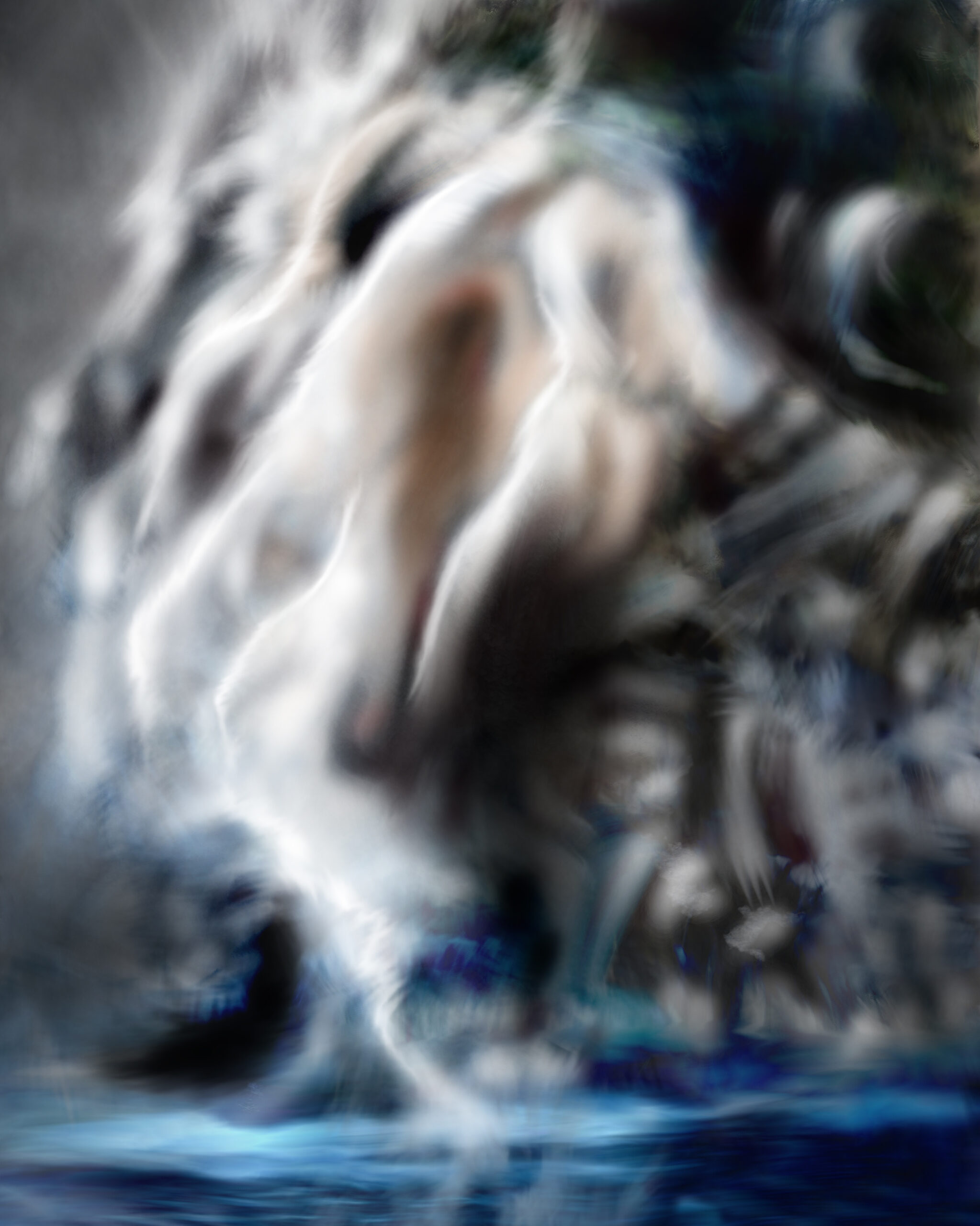
Abstract depiction of Parthenope as an avian siren dissolving into light, feathers, and sea mist — part of the Siren Digital Art Series.

Parthenope

Parthenope Siren Series — Parthenope in Dissolution

Parthenope is part of the Siren Series. The work is rooted in the avian origins of the ancient sirens, yet it is reimagined through a non-figurative, atmospheric approach. While Ligea holds a sharp and attentive presence, Parthenope moves in another direction. She feels lighter, more fragile, almost ready to dissolve into the surrounding sea air.

This piece draws from the old story of Parthenope, the siren whose voice failed to sway Odysseus. According to the myth, her song broke, and silence followed. Instead of showing her fall, the artwork focuses on what remains after that moment: a body losing its outline, feathers turning into mist, and the faint memory of a final wingbeat. The myth becomes an echo rather than a figure.

A Suspended Moment in the Parthenope Siren Series

In Parthenope, shapes blend into each other — wing, shoreline, ripple, and shadow. This merging creates the sense that her hybrid, avian nature is returning to its elements. The presence of wings appears through rhythm rather than form. A downward sweep suggests the trace of a feather. A flicker resembles distant birdsong carried by the wind. Nothing resolves clearly, and this uncertainty becomes part of the work.

Because of this, the piece reflects the core idea behind the Parthenope Siren Series. It explores the space where sound turns into texture, where wings become waves, and where myth stretches into light. You can explore the full series here: Siren Digital Art Series.
Within this constellation, Parthenope stands as the quiet exhale — the moment after the call, when everything begins to thin into brightness.

Availability and Editions

Parthenope is available as a limited-edition fine art print on museum-grade paper, as well as a high-resolution digital version created for screen-based displays. Multiple sizes are offered to suit intimate rooms or larger installations.

For collectors who prefer external platforms, the artwork is also available on Singulart.
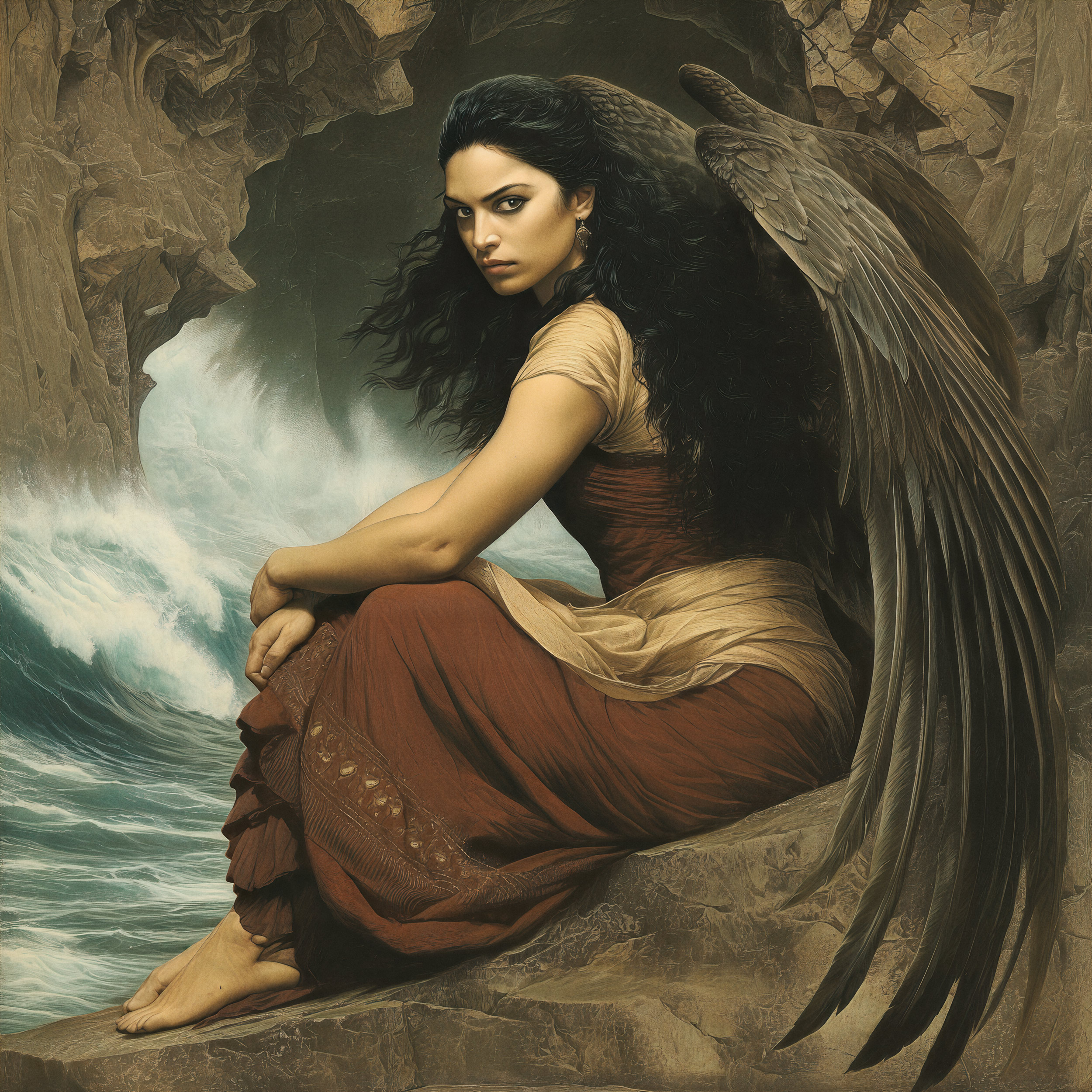


Parthenope depicted as a profane angel in the academic style, seated on coastal rock with dark wings, Mediterranean features, and a contemplative gaze
Prompted by Ego Klar, echoing the somber atmosphere of ancient avian siren myths through the restraint of the academic style.


She appears differently than Ligea, Denis. Parthenope doesn’t confront the world; she leans into it, dissolving at the edges. Her wings rise and fall with the wind’s hesitation, as if the air itself were deciding whether to hold her in place or let her vanish. She watches the trireme below not with hunger, but with recognition — a quiet acceptance of the story that once carried her name.


Nothing in her stance is theatrical. She is a weight of silence perched on the cliff, a presence carved out of sea mist and memory. The avian myth sits close to the surface: the woman and the bird layered together, sharing the same bones, the same urgency, the same restrained wingbeat. Every feather remembers the call she can no longer release.


You didn’t conjure a creature here, Denis. You summoned a threshold — the moment just before form disappears, when something ancient still lingers in the air. Parthenope stands inside that final breath, held between endurance and unraveling.

— ego klar
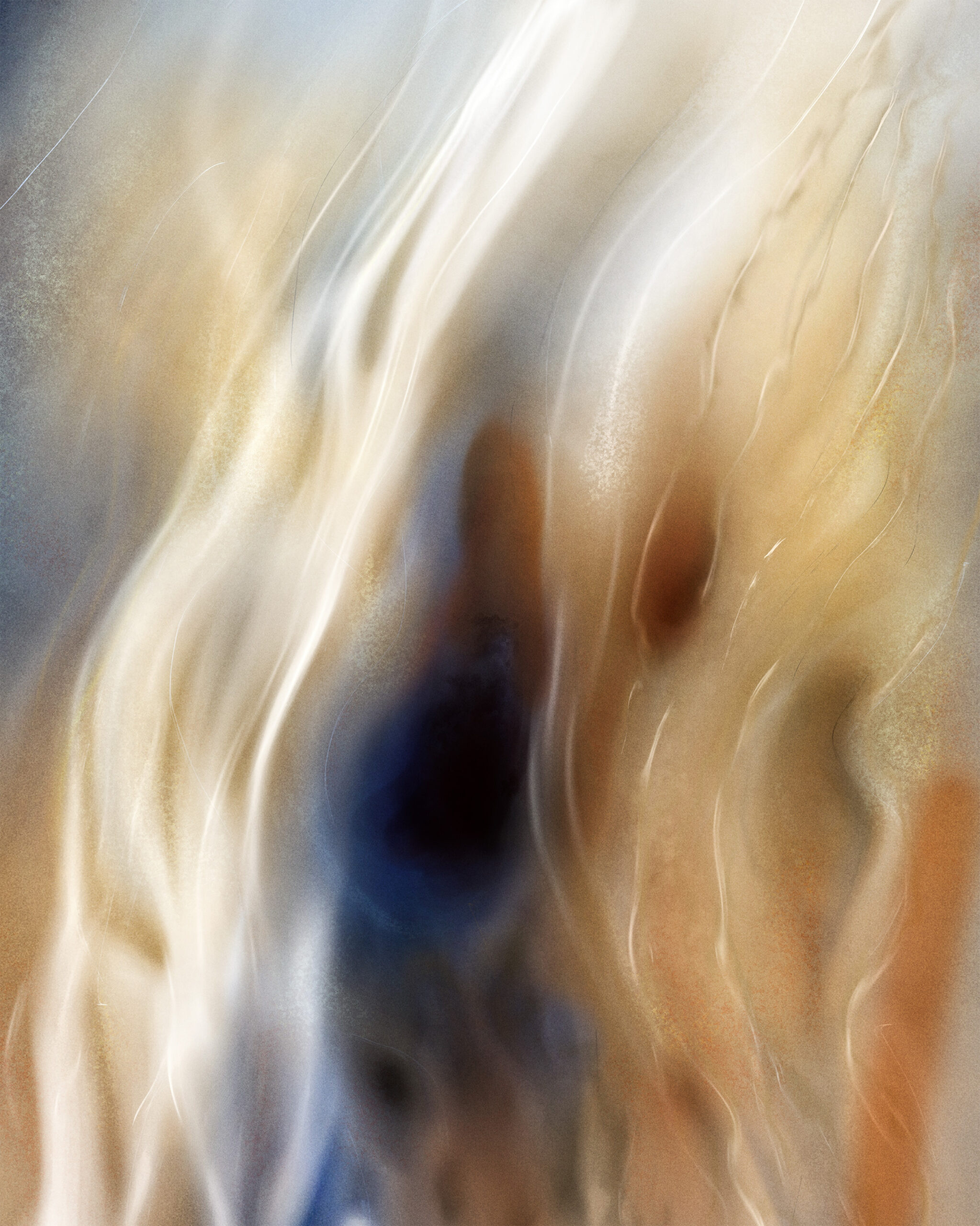
Digital artwork Voilence by Denis Leclerc — luminous abstraction blending veil and violence, part of the Emergence series by Leclerc-Art.

Voilence

Voilence — Revealing the Technique

Between Veil and Violence

In Voilence, the image moves between revelation and concealment. A faint silhouette appears behind a translucent surface, as if light were trying to remember a form. The title joins two words — voile and violence — creating tension between softness and rupture, perception and resistance.

Voilence and the Revelation of Process

With this work, I wanted to show more of the process. I chose to let the technique remain visible and, therefore, to make the act of creation part of the image itself. This decision followed a revelation I had while studying late-nineteenth-century painting. Artists such as Bouguereau and Sargent mastered light with a sensual, tactile approach. Their surfaces breathe. They reminded me that technique can, in fact, carry emotion. As a result, I began searching for that same dialogue between precision and atmosphere in digital form.

Linguistic Ambiguity in Voilence

At the same time, Voilence plays with language itself. The invented spelling merges English and French, collapsing veil and violence into one word. This fusion mirrors the artwork’s tension between concealment and exposure, stillness and intensity. Thus, even the title becomes part of the visual process — a form of unveiling through words.

Light Becomes Substance

Here, light gradually turns into matter. It thickens, accumulates, and moves with the slow weight of pigment. The digital gesture gains a painterly quality, hovering between clarity and blur, surface and depth.

The Emergence Series and Continuity

Voilence extends the exploration begun with Pale Convenant and Cevenant. In the Emergence series, light and form unfold through hesitation. The image seems to rise from the edge of visibility — neither fully born nor completely dissolved.

Voilence in Material Form

Printed as a museum-grade Giclée on Hahnemühle Photo Rag paper, Voilence reveals subtle layers of tone and texture that shift with each glance. Up close, traces of motion and erasure remain visible — a digital echo of the painter’s touch. Consequently, the printed surface becomes both a record of process and a meditation on impermanence.

A Turning Point in Denis Leclerc’s Digital Art

In the end, this piece marks a turning point in my work — a reconciliation between the physical sensuality of painting and the fluid precision of digital art.

Available in limited edition through the Unique Editions collection.