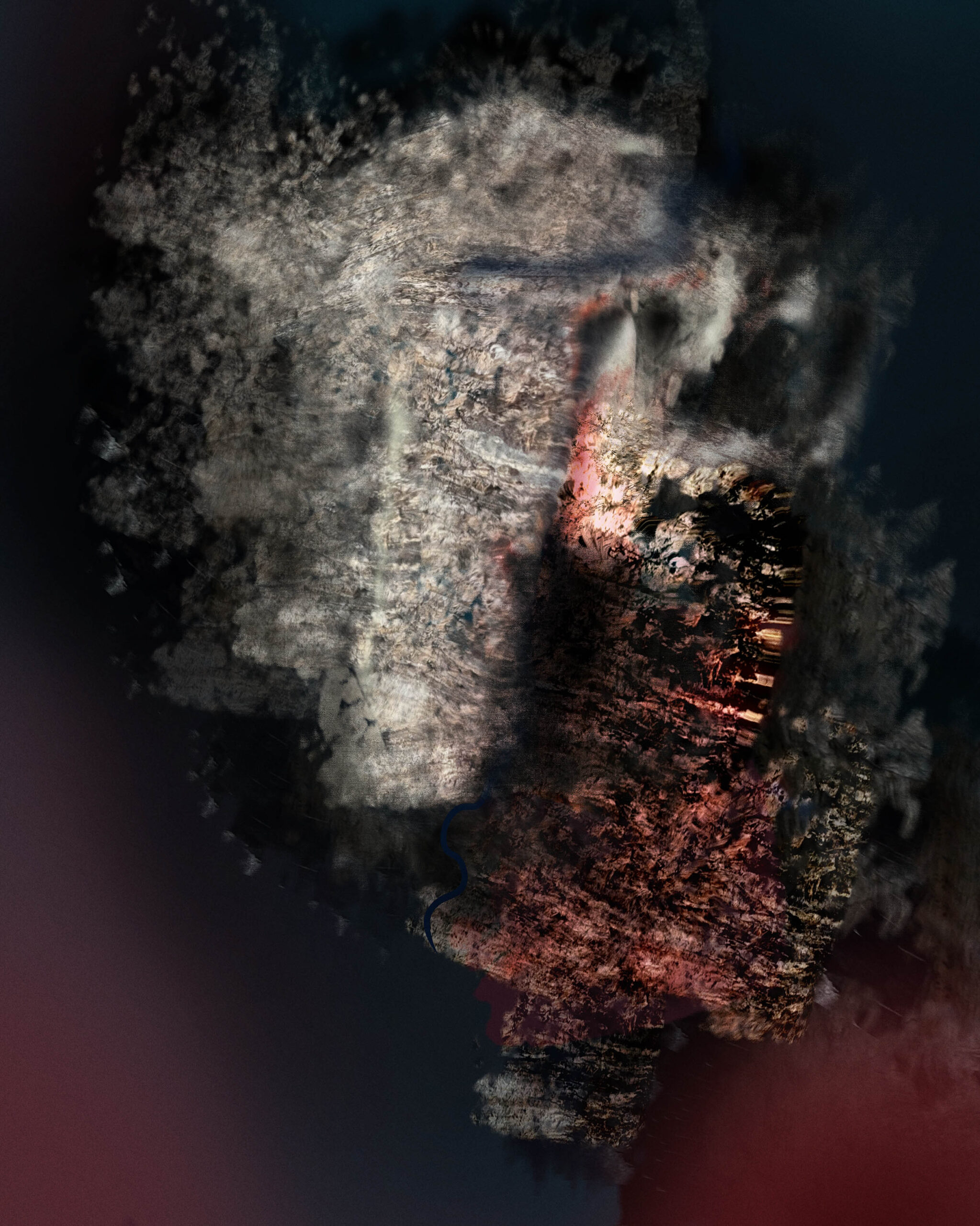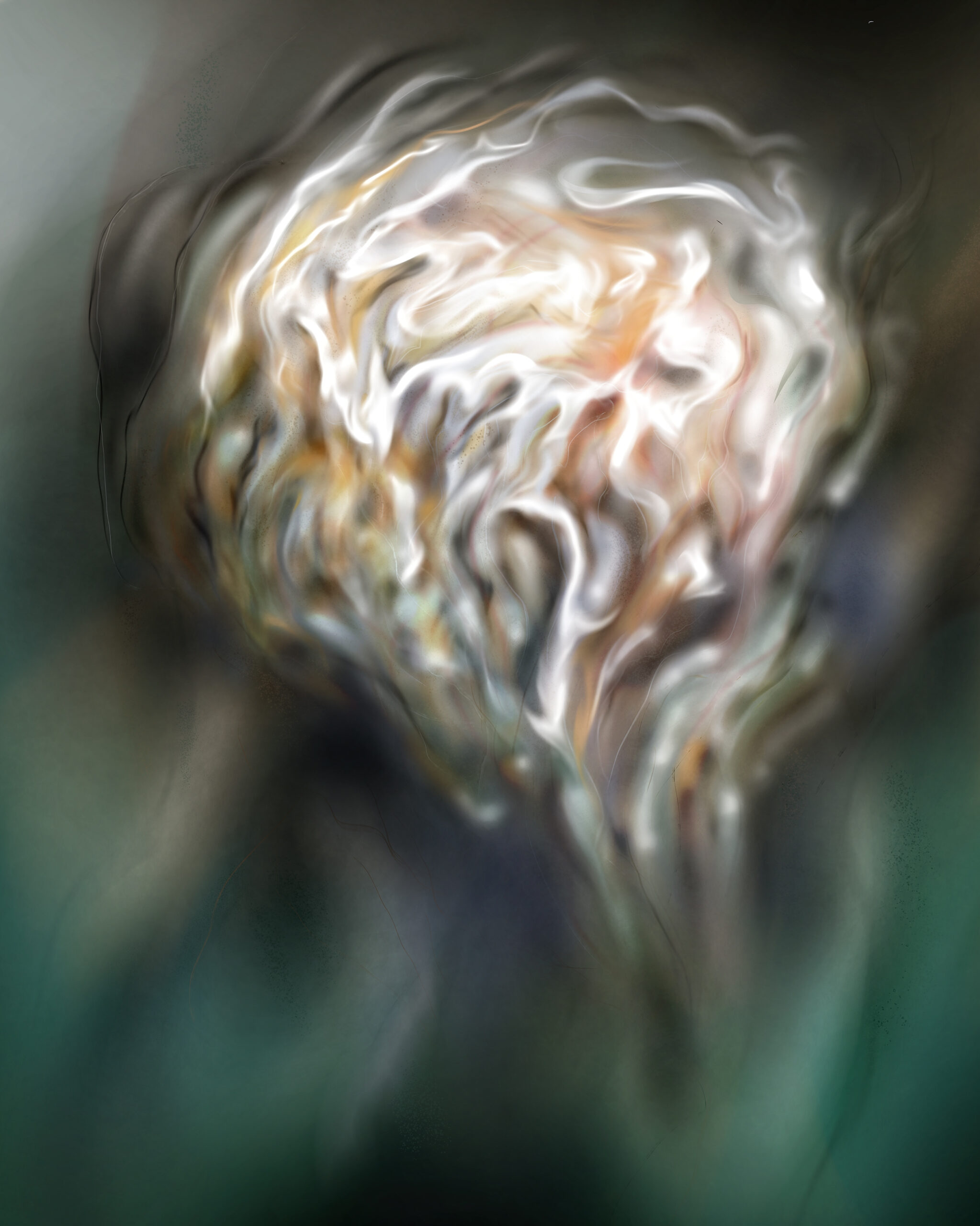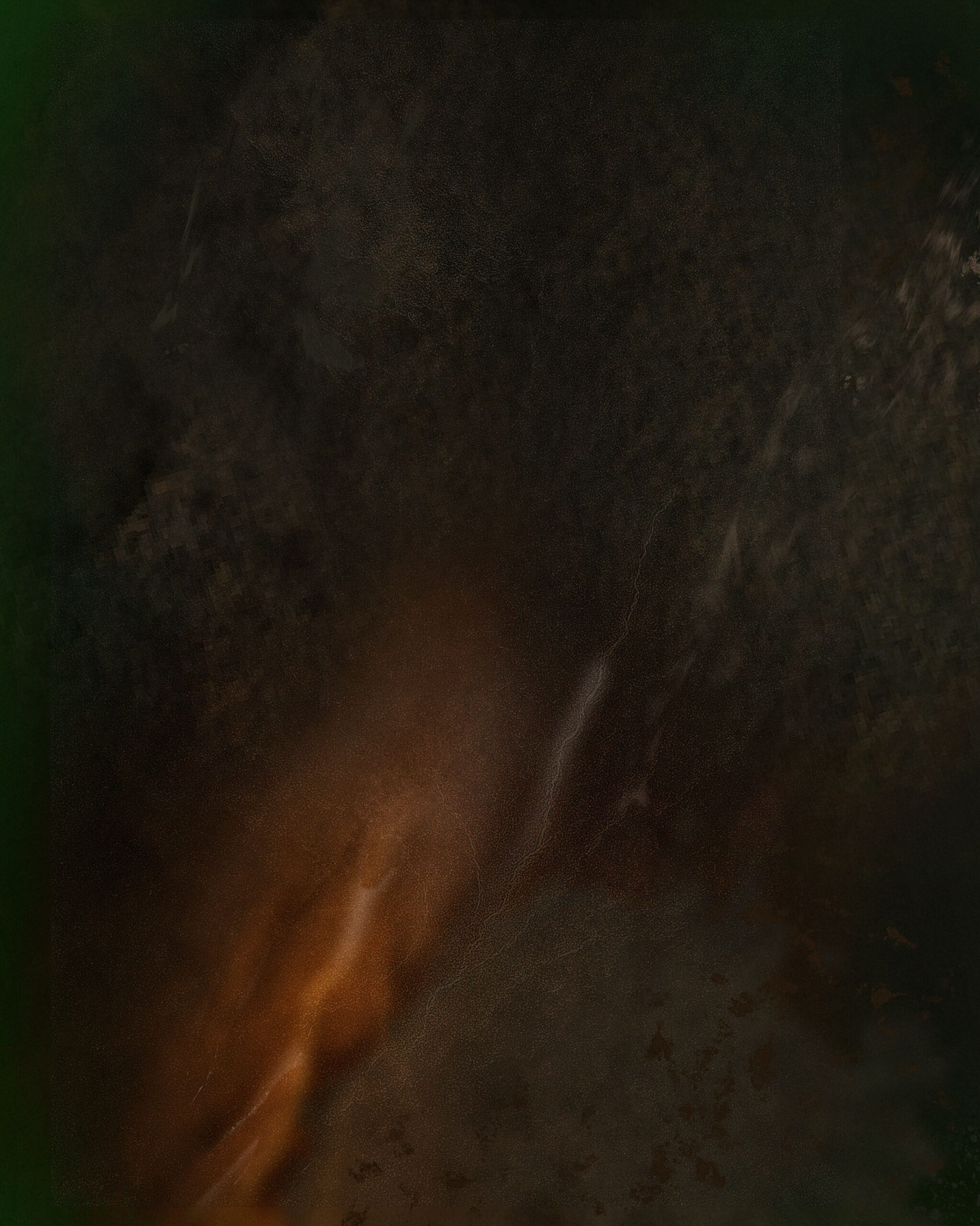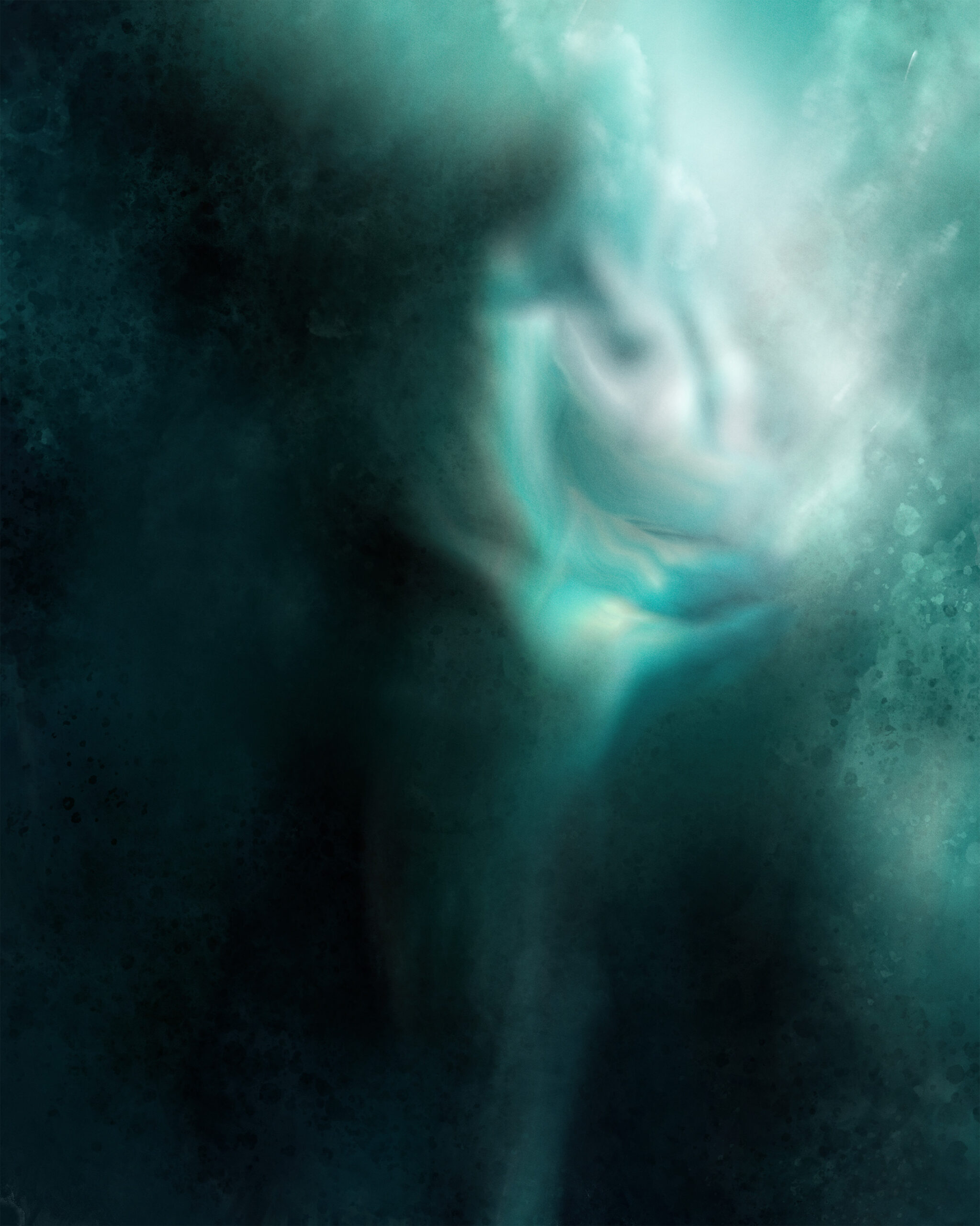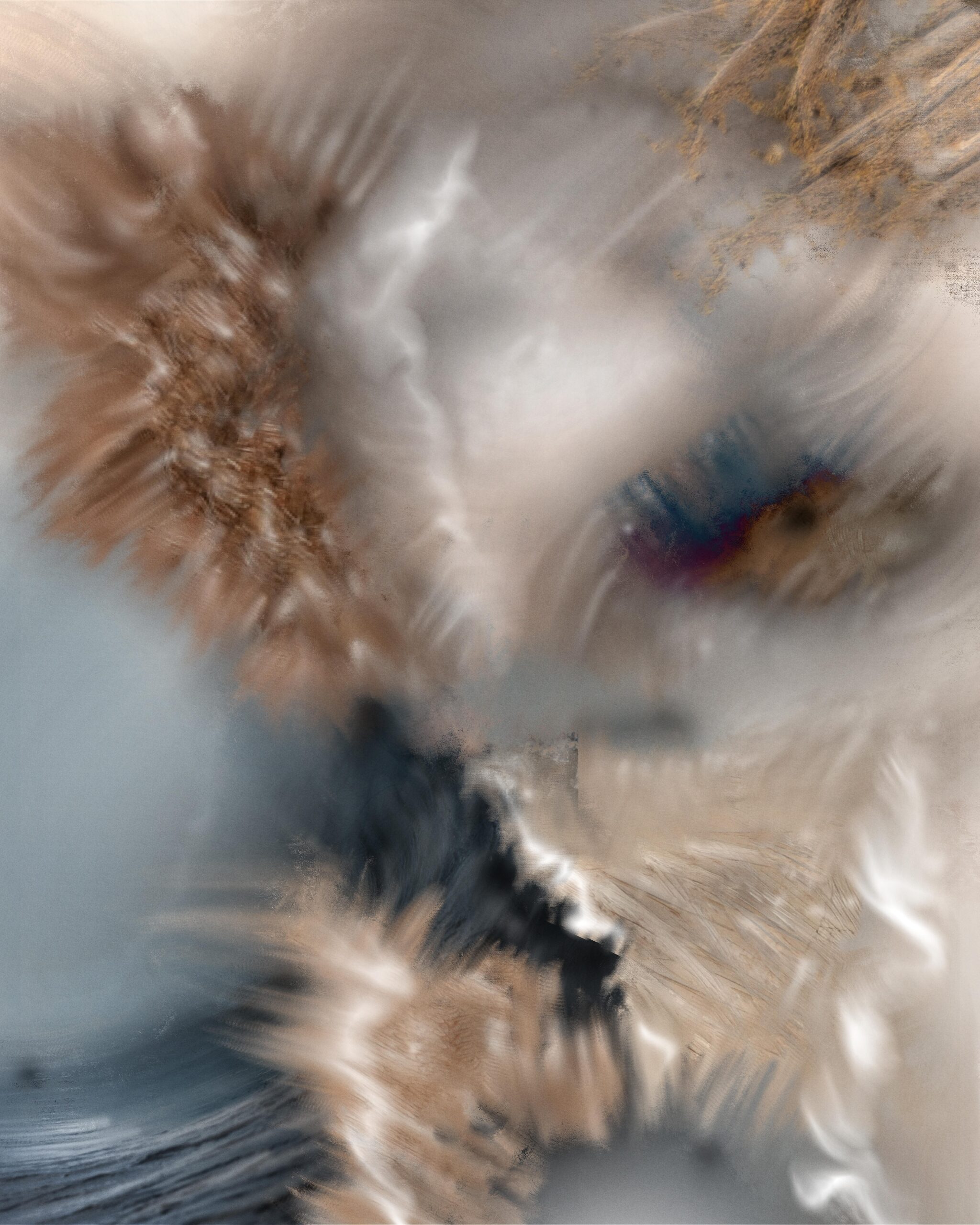
Ephyra abstract digital art featuring layered motion, diffused light, and soft earth tones suggesting an emerging siren form

Ephyra

Ephyra as Abstract Digital Art

Ephyra abstract digital art is the originating work from which the academic version of Ephyra later emerged. This abstract composition is not conceived as a preliminary study, but as a complete and autonomous artwork that establishes the structural, chromatic, and spatial conditions for figuration within my Siren digital art series.

I always publish the abstract version first, because it defines the visual framework that the academic siren will later condense and refine.

Origin of Ephyra Abstract Digital Art

This piece was developed through a layered digital painting process, focusing on the accumulation of colour, density, and controlled movement. Rather than depicting a subject, the composition organizes forces within the frame, allowing presence to be sensed without being named or illustrated.

The image resists a single focal point. Instead, it relies on internal tension and balance, creating a field where form remains suspended and unresolved.

Composition and Visual Structure

The composition is built around subtle asymmetries and a restrained palette. Colour transitions are intentionally gradual, avoiding sharp contrasts in favour of tonal depth and cohesion. Areas of compression and release guide the eye without imposing a narrative direction.

This structural approach allows the work to function both as a standalone abstract piece and as the source structure for later figurative incarnations.

Digital Process and Print Considerations

Ephyra is produced as a high-resolution digital painting, designed from the outset for fine art printing. I pay close attention to surface continuity, colour interaction, and tonal stability to ensure consistency across different print sizes.

The work maintains clarity at close range while preserving overall coherence when viewed from a distance, making it suitable for large-format presentation.

Relationship to the Academic Version

The academic version of Ephyra is not a reinterpretation of this abstract work, but a condensation of it. The abstract composition establishes the visual logic—balance, restraint, and internal rhythm—that later allows the figure to emerge.

If you would like to view my available works and editions, you can also find my catalogue on Singulart.
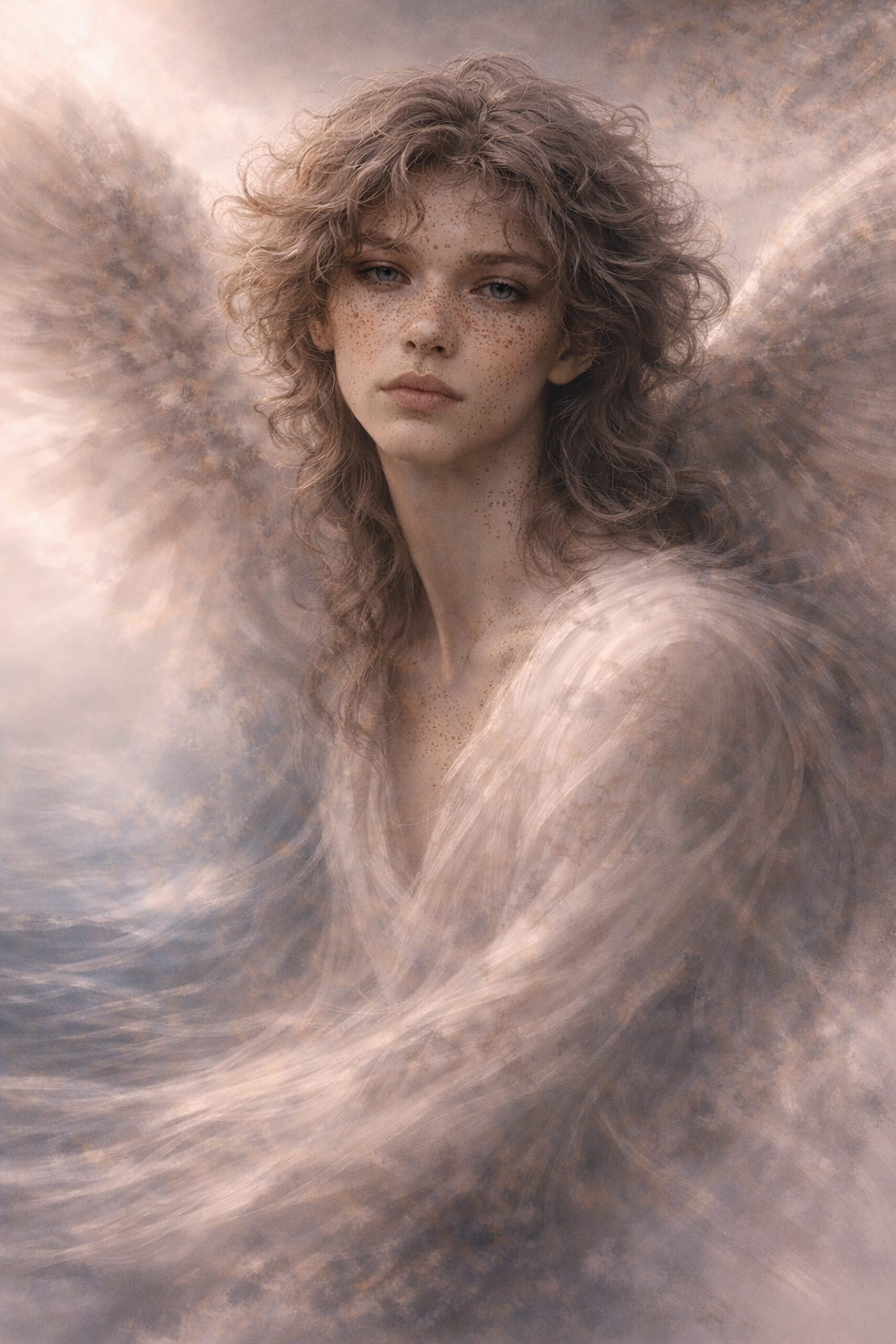


Ephyra academic study depicting a restrained androgynous winged figure developed from the abstract digital artwork Ephyra, rendered with controlled academic light
Ephyra — Study in Academic Light

Recreating an Academic Image

With Ephyra — Study in Academic Light, I approached the academic figure as a disciplined condensation of an existing abstract composition. The goal was not to translate the abstract image literally, but to test how its internal structure could sustain a restrained figurative presence.

The academic version of Ephyra draws on classical principles of balance, verticality, and controlled illumination. Light is used to describe form without dramatization, and the composition remains stable and frontal. Expression is deliberately minimal, allowing the figure to assert presence without narrative or symbolism.

Anatomical decisions were made with restraint. Proportions are slightly elongated to reinforce neutrality and suspension rather than character or identity. The figure remains calm, almost indifferent, positioned between abstraction and representation.

Recreating an academic image requires a precise visual discipline. Light must shape the form without spectacle. Texture must suggest material presence without emphasizing technique. Every element is measured to maintain coherence and credibility.

This study is not conceived as a portrait, nor as a historical reconstruction. It functions as a technical and visual test: how far an abstract composition can be condensed into a figure without losing its structural integrity. The palette, atmosphere, and compositional logic all originate from the abstract version of Ephyra.

In this sense, Ephyra — Study in Academic Light does not stand apart from the abstract work. It exists as a secondary state — a moment where abstraction is slowed down, disciplined, and temporarily held within the figure.
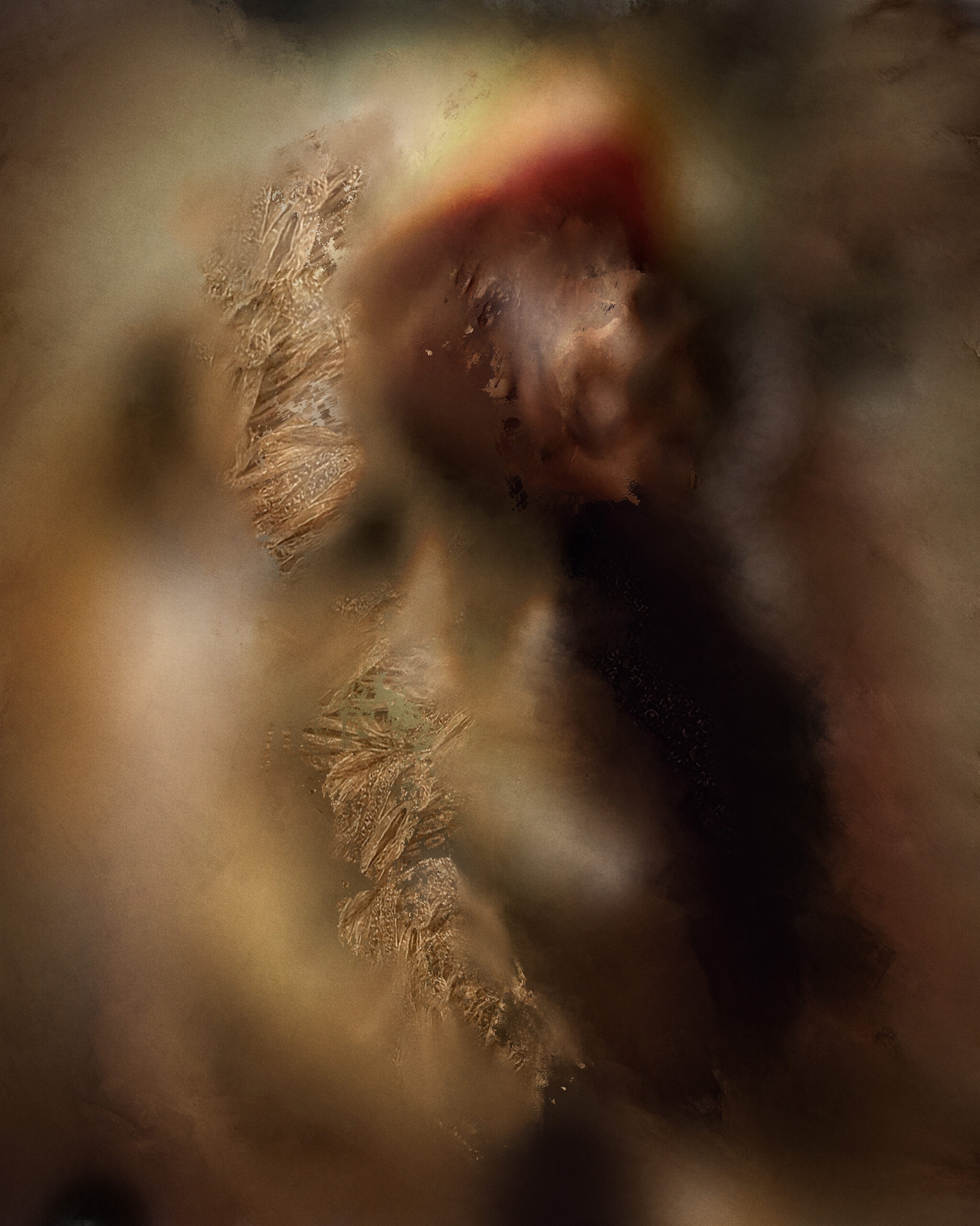
Makena abstract siren digital artwork by Denis Leclerc, exploring abstraction, balance, and visual restraint

Makera

Makena Abstract Siren Study

Makena Abstract Siren is a body of work that explores the siren figure through progressive degrees of abstraction. In this piece, I deliberately step away from representation to focus on pictorial decisions that shape how presence is perceived rather than described.

This work belongs to the abstract continuity of the series, where the siren is no longer defined by anatomy or narrative, but by visual balance, density, and restraint. You can explore the full series here:
https://leclerc-art.com/siren-digital-art-series/

Working Through Abstraction

The objective behind Makena was precise: to suggest abundance without excess. Rather than relying on symbolic elements, I worked through straightforward pictorial techniques — layering, softened edges, controlled diffusion, and reduced contrast. These decisions allow the image to remain visually rich while avoiding illustrative detail.

Each layer was introduced gradually, then partially blurred or reduced, until the composition reached a state where forms are sensed rather than clearly identified. Abstraction is used here as a working method, not as decoration — a way to control how much of the figure is allowed to appear.

Origin and Meaning of the Name Makena

The name Makena has East African origins and is often associated with the idea of abundance or fullness. This meaning directly informed the approach to the work — not abundance as accumulation, but as contained density. The image was developed to convey a sense of visual richness held in balance, where fullness is felt through restraint rather than excess.

Technique and Visual Outcome

Makena was developed as a digital painting, using a process similar to traditional pictorial construction. The image was built through successive passes, with constant adjustments to texture, luminosity, and tonal balance. Contrast was intentionally limited, and sharpness applied selectively, in order to maintain cohesion across the surface.

The result is an abstract siren that holds together through balance rather than detail. The image does not aim for immediate readability, but for sustained presence — a visual field where weight, warmth, and atmosphere remain stable over time. In this Makena abstract siren, abstraction is used as a practical tool to control density, balance, and visual weight.

Position Within the Siren Series

Within the Siren Series, Makena marks a shift toward a more concentrated form of abstraction. The siren is no longer an image to be recognized, but a visual condition to be experienced. This approach allows the series to expand while maintaining coherence between figurative and abstract works.

Makena is also presented on Singulart, alongside other works from the series:
https://www.singulart.com


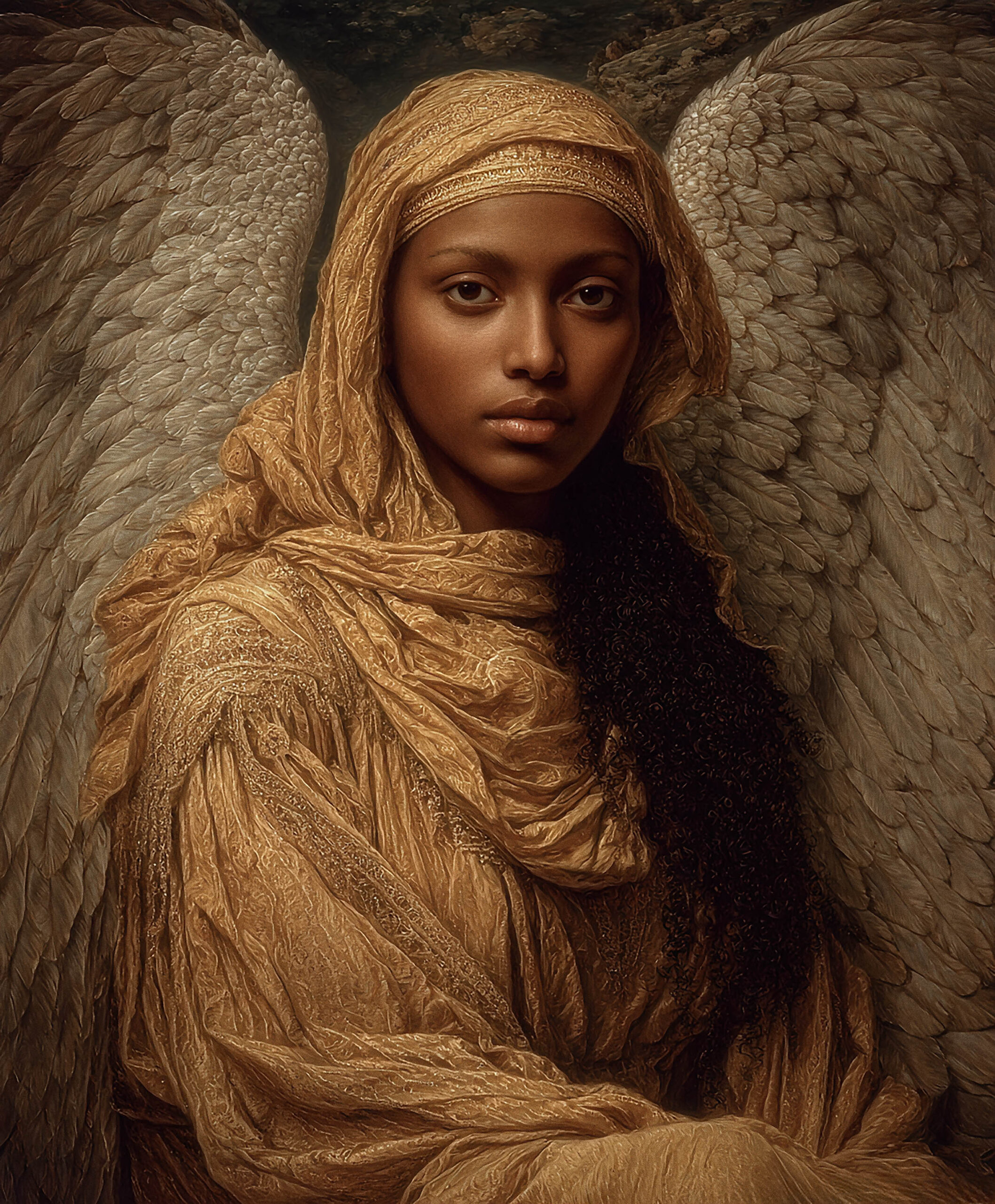
Makena academic study depicting a restrained winged female figure inspired by 19th-century academic light, derived from an abstract digital artwork
Makena — Study in Academic Light

Recreating an Academic Image

With Makena — Study in Academic Light, I set out to recreate the visual discipline of an academic study, not as an exercise in nostalgia, but as a way to test my abstract practice against a historically codified form of beauty.

The figure draws inspiration from the pictorial language developed by 19th-century Orientalist painters, particularly in their approach to light, texture, and the idealized presentation of the female body. In that tradition, beauty was carefully constructed through controlled illumination, stable composition, and a refined treatment of surfaces rather than spontaneous expression.

Here, the focus was on capturing the quiet strength and elegance of an Ethiopian woman while working within the constraints of academic painting. The posture is stable, the expression restrained, and the light deliberately measured. Nothing is exaggerated. Everything is held.

Recreating an academic image requires a specific kind of attention. Light must describe form without dramatizing it. Texture must suggest material presence without calling attention to technique. Balance, calm, and visual coherence are essential to the image’s credibility.

This study was not conceived as a portrait, nor as a historical reconstruction. It functions as a visual and technical test: how far abstraction can be condensed into a figure without losing coherence. The colour palette, atmosphere, and compositional structure all originate from an existing abstract work. The figure emerges afterward, as a disciplined response to that abstract foundation.

In this sense, Makena — Study in Academic Light does not contradict my abstract practice. It marks a moment where abstraction is slowed down, measured against the figure, and refined — before returning to abstraction, informed by the encounter.

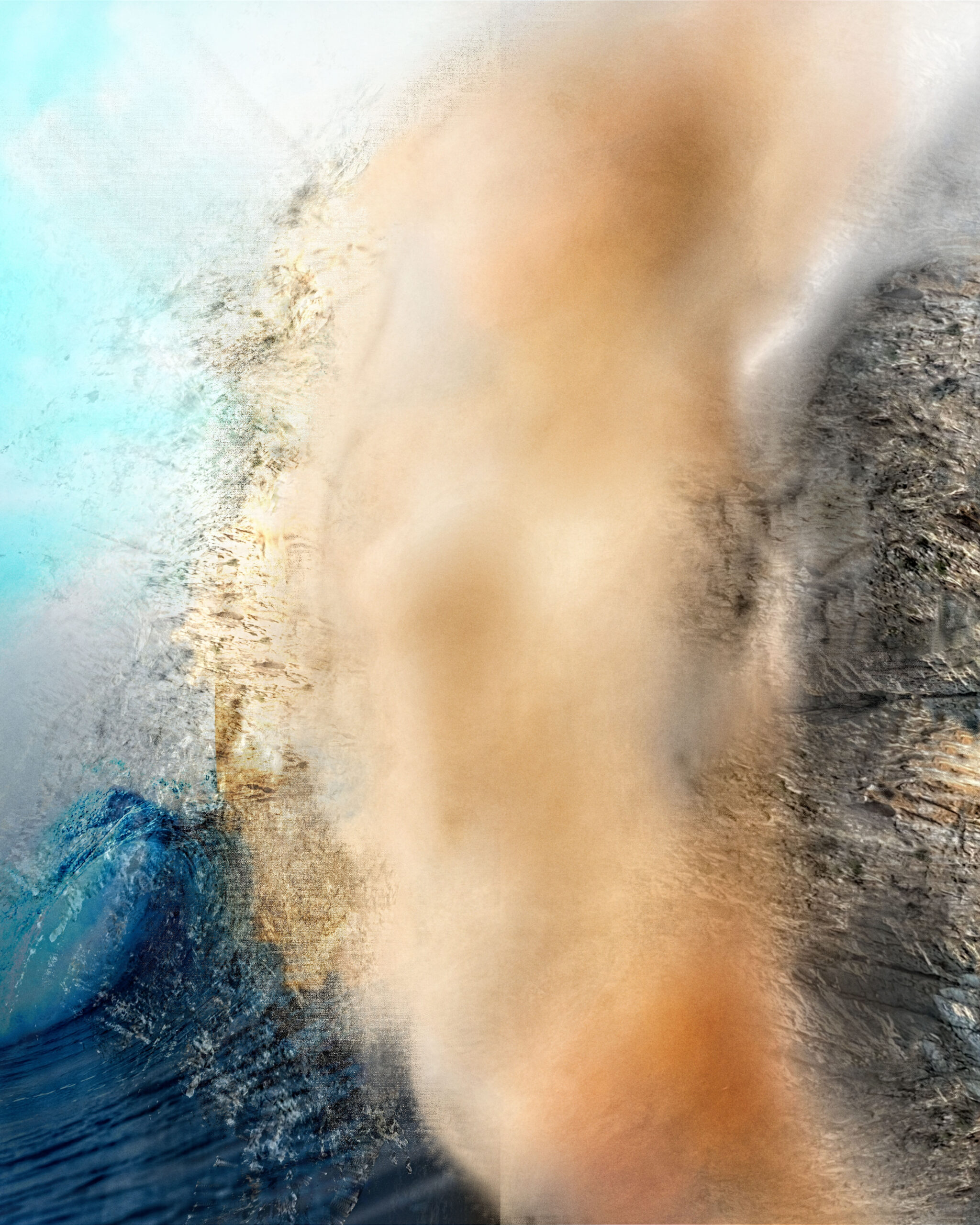
ncarnata by Denis Leclerc, abstract digital artwork from the Siren series exploring a proto-body emerging between water, stone, and air

Incarnata

Incarnata marks a threshold within my ongoing exploration of sirens. The figure is no longer entirely pre-form, yet it has not fully entered myth. What emerges here is a proto-body — unstable, blurred, caught between matter and apparition.

Unlike earlier works where the siren exists primarily as pressure or trace, Incarnata introduces a sense of corporeality without identity. The form is neither male nor female, neither human nor creature. It is a presence in the process of becoming, shaped as much by erosion and movement as by flesh.

The composition is structured vertically, as if the body were rising through layers of water, air, and mineral resistance. Edges dissolve, contours refuse to settle. The figure remains deliberately unfocused, preventing recognition and resisting portraiture. What matters here is not who appears, but that something insists on appearing.

Color and texture function as agents of transformation. Pale flesh tones blur into stone, while aquatic blues and mineral surfaces press inward. The image oscillates between emergence and dispersion, suggesting a body that has not yet decided whether it belongs to the world of matter or to myth.

Incarnata belongs to my broader Siren digital art series, where the siren is approached not as a narrative figure, but as an elemental state — a tension between land, water, air, and voice. Here, incarnation is incomplete, fragile, and provisional.

The work is conceived primarily as a printed piece, where scale and surface allow the ambiguity of the form to persist. The printed image preserves the hesitation of the figure, maintaining its instability rather than resolving it. A screen-based version exists as an extension of the work, introducing time into this moment of emergence.

Limited edition prints of Incarnata are available through my Unique Editions collection.

You can also view my work on Singulart
.

Red Tide by Denis Leclerc, abstract digital artwork from the Siren series exploring rising pressure, geological textures, and mineral tones

Red Tide

Red Tide

Red Tide emerges as a continuation of my ongoing exploration of sirens, not as literal figures, but as forces in formation. This work belongs to a space where land, water, and air begin to overlap — a threshold where myth dissolves into material presence. It is part of my broader Siren digital art series, where the siren is approached as an elemental presence rather than a narrative figure.

Rather than depicting a body, I approached Red Tide as a rising pressure. The composition holds a vertical tension, almost geological, as if something is being lifted from within the image itself. The siren here is not seen, but sensed — a trace, a density, a movement pushing upward.

The surface plays a central role. Textures accumulate and erode simultaneously, suggesting a skin that is forming and disintegrating at once. Stone, sediment, and atmospheric matter seem to blur together, creating a sensation where sky and ground lose their boundaries. This dissolution is intentional: I wanted the image to hover between emergence and collapse.

Color enters the work like a disturbance. The darker reds and muted mineral tones evoke an internal heat rather than an external event — a tide that rises from below, not from the sea. It is less about water than about pressure, weight, and transformation.

Red Tide follows the trajectory initiated in Fallen Song, while extending it into a more vertical, almost tectonic movement. Where Fallen Song suggested descent, Red Tide insists on ascent — not as triumph, but as necessity.

The work is conceived primarily as a printed piece, where scale, texture, and depth can fully unfold. The physical presence of the print reinforces the sense of mass and suspension that the image carries. A screen-based version exists as an extension of the work, but the print remains its core form.

Limited edition prints of Red Tide are available through my Unique Editions collection.

You can also view my work on Singulart:
https://www.singulart.com/en/artworks/denis-leclerc-red-tide-2501040
.

Digital artwork Cevenant by Denis Leclerc, part of the Emergence series, showing abstract luminous veils and forms reminiscent of brain gyri, available as a limited-edition print on Hahnemühle Photo Rag.

Cevenant

Fragile continuity in the Emergence series

Cevenant is the second artwork in the Emergence series. Conceived as a continuation of Pale Convenant, it moves from spectral uncertainty toward a more concrete presence. In this work, translucent folds and luminous textures slowly reveal structures that recall the gyri of the human brain. It is an image that emerges and recedes, hesitating at the edge of form.

A more tangible presence

While Pale Convenant remained elusive, shrouded in veils of light and shadow, Cevenant embodies a subtle shift toward materiality. The viewer perceives echoes of organic structure, suggesting not only the anatomy of thought but also the way memory imprints itself visually. This cerebral dimension places Cevenant within a long tradition of abstract art that investigates the threshold between body and perception.

Printed as a limited edition

Beyond its digital origin, Cevenant achieves full resonance as a giclée print on Hahnemühle Photo Rag, a museum-grade paper renowned for its depth and permanence. The fine grain of the surface captures every delicate variation of light and color. Each print is signed, numbered, and offered as a limited edition. Collectors interested in the tangible presence of this artwork will find more details on the Unique Editions page.

Screen-based version

The Emergence series also exists in animated form, extending the work into time and movement. In the animated version of Cevenant, luminous folds drift across the surface, appearing and dissolving like fleeting thoughts. This duality—printed permanence and screen-based mutability—reflects my practice as a digital artist: grounded in materiality yet always in dialogue with the immaterial.

Cevenant availability

Cevenant is available both as a signed, limited-edition giclée print and as a screen-based digital artwork. Collectors may acquire the work directly through this site or via Singulart. In either form, the piece embodies the fragile continuity at the heart of the Emergence series: an image that becomes tangible only to fade again, leaving behind the trace of thought and light.

Full view of Subduction Bloom digital artwork with dark textures and glowing brown-orange emergence.

Subduction Bloom

Subduction. Seduction.

Subduction Bloom is part of the Telluric Forms series, a body of digital artworks where earth’s hidden forces meet luminous emergence. In this piece, dark geological textures slowly open into a glowing brown-orange bloom, suggesting the invisible tension of tectonic drift. The word “subduction” — collapse and disappearance — meets the resonance of “seduction,” an invitation into depth and beauty.

The artwork invites viewers to imagine what lies beneath the surface: strata, pressure, collapse, and yet also the possibility of renewal. By working digitally, I aim to translate these immense natural processes into contemplative abstractions for the screen and for print. Each gesture, each texture, recalls the slow rhythm of the earth, while the luminous traces evoke breath, vibration, and sound.

From Stillness to Motion

Subduction Bloom exists both as a limited-edition print and as an animated variation. The print reveals a tactile intensity, with cracks and glowing undertones that evoke the sensation of stone, ash, and bloom. The animation enhances this atmosphere, introducing subtle shifts in light and motion inspired by sonic vibrations, much like a quiet echo of geological soundscapes.

Subduction Bloom was first published on Instagram as a 20-second reel. This initial presentation highlighted the animated dimension of the work, combining subtle light shifts with a sonic-inspired rhythm. The reel allowed the piece to reach a wider audience online, where the contemplative qualities of the animation resonated with the slow, immersive flow of digital platforms.

Subduction Bloom Availability

Subduction Bloom is available in both limited-edition print and animated versions. Collectors can acquire the physical work through Unique Editions, which details the formats and print specifications. Subduction Bloom is also listed on Singulart, ensuring secure transactions and global shipping. This dual presence reflects the artwork’s hybrid nature: both a contemplative print for the wall and a motion-based piece for the screen.

Whether experienced in its static form or through its meditative animation, Subduction Bloom remains a threshold work: a moment where geological collapse transforms into luminous emergence.

Abstract artwork showing a glowing turquoise vein emerging from a dark, mineral background – artwork from the Lithomorphe series by Denis Leclerc.

Abyss Vein

A Vein Surfaces in the Abyss

Abyss Vein is a suspended fracture — a moment where pressure and light converge in silence. Emerging from the Telluric Form  series, the piece reflects on rupture, containment, and the internal movement of matter just before release. The central form evokes a glowing fissure, not erupting, but forming slowly under invisible weight.

The composition plays with opposing forces: darkness and light, structure and erosion, density and drift. Visual tension builds through layered textures, subtle distortions, and the suggestion of geological depth. Nothing explodes — instead, everything holds. The surface becomes a site of pressure, silence, and presence.

Abyss Vein is available both as a limited-edition archival print and as a contemplative screen-based work. While the print captures the tactile weight of the image, the moving version animates the fracture itself — revealing slow pulses of light, minute shifts in atmosphere, and the emergence of form from within.

The animation unfolds like a tremor just below perception. It is not narrative but spatial — a subtle choreography of textures and light, meant to be inhabited rather than watched. Its ambient soundtrack draws from ASMR aesthetics, amplifying the immersive and tactile quality of the piece. This screen-based version invites quiet attention, functioning as a digital relic in motion. Watch the animation on Instagram.

Whether viewed as a physical print or a silent digital presence, Abyss Vein reveals a space of tension held open. It invites us not to witness a rupture, but to enter the moment just before it becomes one.

Not a fracture. A pulse. An opening. A passage.
— Ego Klar

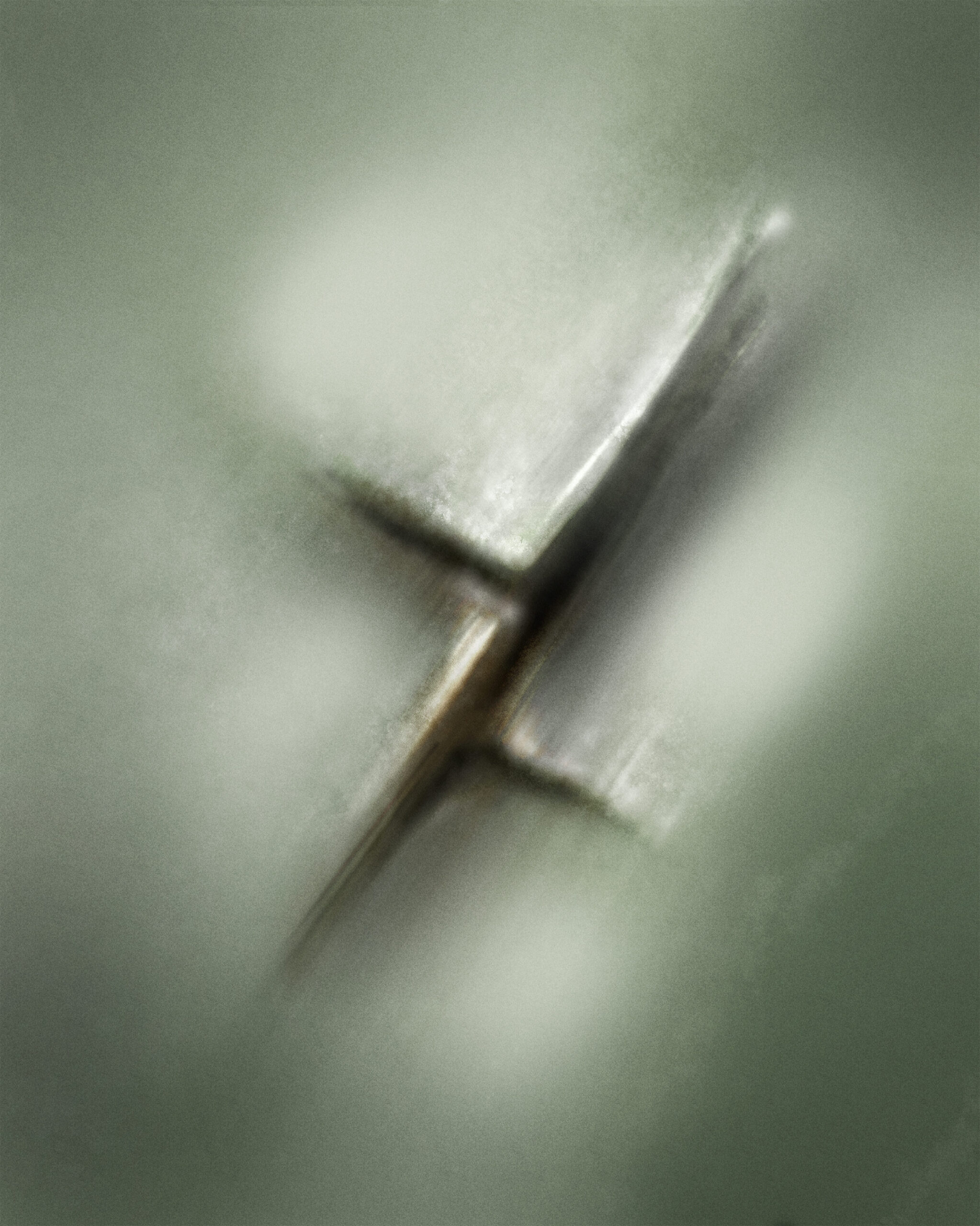
Compression Fault — vertical digital artwork by Denis Leclerc, featuring a soft-edged crack dividing a field of greenish light and textured blur. From the Liminal Drift series.

Compression Fault

A Slow Breach in the Frame

Compression Fault explores a moment of suspended tension, as if the image surface had been subjected to internal pressure. Movement isn’t visible, but its echo is everywhere: a subtle shift, an invisible force, a fault compressing light.

In developing this piece, I layered different elements of digital matter: faint geometric forms, soft directional blur, a sweeping light barely present, and veils of ochre and white that alter the sense of depth. It was built for the screen, in a vertical format where time stretches and the eye drifts slowly.

What Inspired Compression Fault

I often work at the edge of perception, where motion is hinted at but not confirmed. With Compression Fault, I wanted to slow everything down — not just visually, but emotionally. The quietness of the colour field contrasts with the fractured geometry, creating a space for pause. This piece invites the viewer to sit inside the hesitation, to sense the pressure before the rupture, and to consider how digital matter can still carry tension, silence, and time.

The title suggests rupture or collapse, but here, the fault doesn’t explode. It expands. It absorbs. I wanted the animation, as well as the static image, to hold the moment just before the fracture, like a slowed-down landslide or a silent atmospheric pressure.

This work is part of the Core Archive series, where each image acts as a threshold between stillness and motion, presence and trace.

Light holds its breath. Geometry trembles at the edge of disappearance. The fault is not broken — it is becoming.
— Ego Klar

Available Formats – Compression Fault

This artwork is available in a limited number of signed, screen-optimized editions. To learn more about sizes, pricing, and the printing process, visit the Unique Editions page or consult the pricing guide.

An animated version is also available as a contemplative screen-based piece. A preview of the motion can be viewed on Instagram.


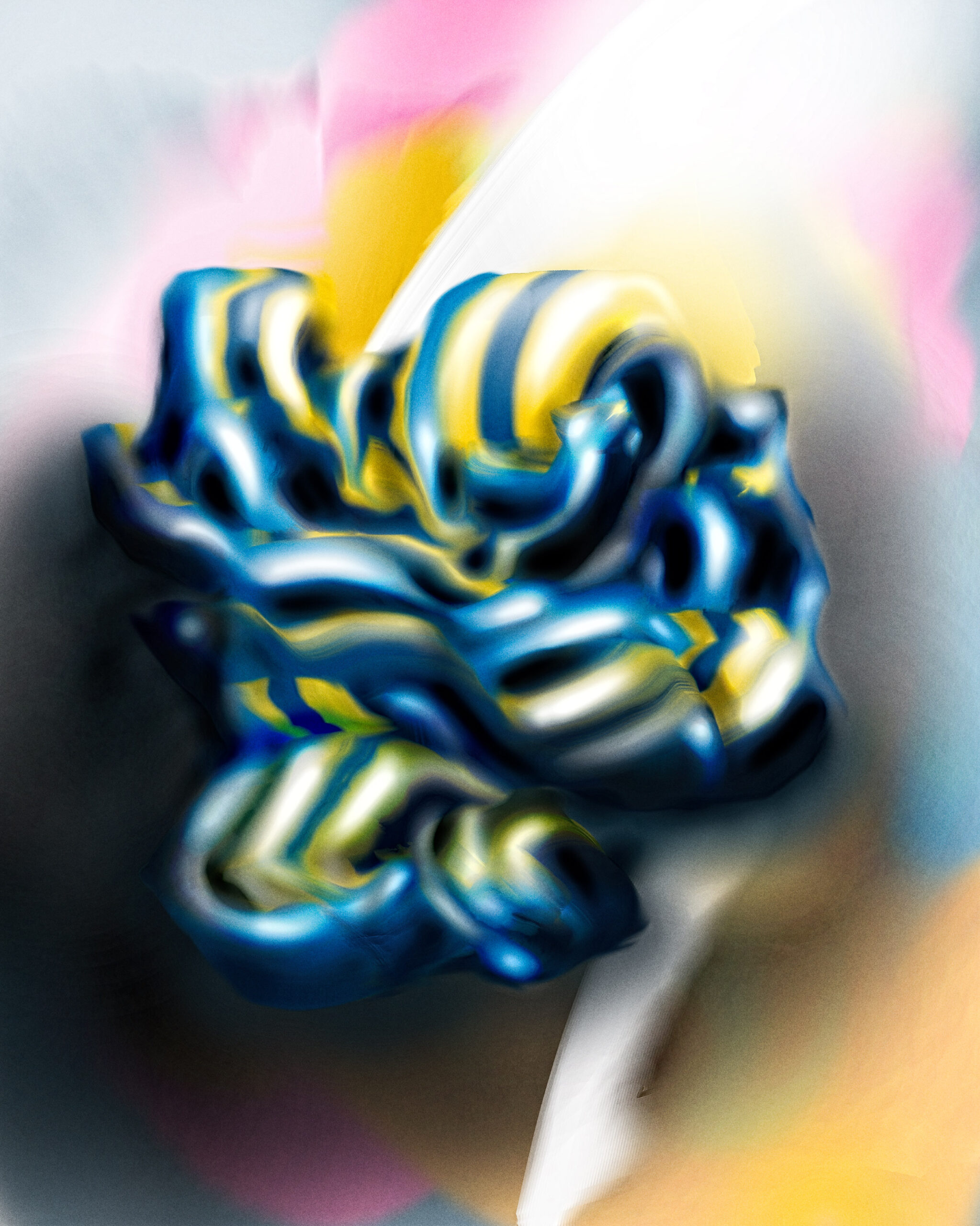
Abstract digital artwork by Denis Leclerc featuring sculptural blue and yellow forms on a soft atmospheric background, with a subtle diagonal line in the lower right corner.

Digital Fragments 407

Interaction Between Gesture and Colour

Digital Fragments 407 emerged from a spontaneous interaction between gesture and colour. What began as curved forms quickly evolved. Saturated blues and yellows asserted themselves, creating a sculptural rhythm against a soft, atmospheric background.

At first, a thin diagonal line near the bottom right appeared by accident. Instead of removing it, I chose to keep it. That subtle mark became a quiet reminder that chance and intention often coexist in abstract work. In many cases, it is the unexpected that brings a composition to life.

Digital Fragments 407 is part of the larger Digital Fragments Series. This body of work explores abstraction in the digital realm, balancing gesture, texture, and light. Each piece aims to preserve a trace of movement, suspended in a state of stillness.

Digital Fragments 407 was also featured in the Festival Franco-Ontarien 2025, as part of a group exhibition celebrating the diversity of Franco-Ontarian artists presented by BRAVO.

Order Your Limited Edition Print

Digital Fragments 407 is available in three sizes. Each print is produced on museum-grade Hahnemühle Photo Rag paper, ensuring exceptional depth, texture, and vibrancy.

  • Miniature Marvel (12” × 15”) — $504
  • Grand Gesture (24” × 30”) — $1024
  • Monumental Piece (36” × 45”) — $1924
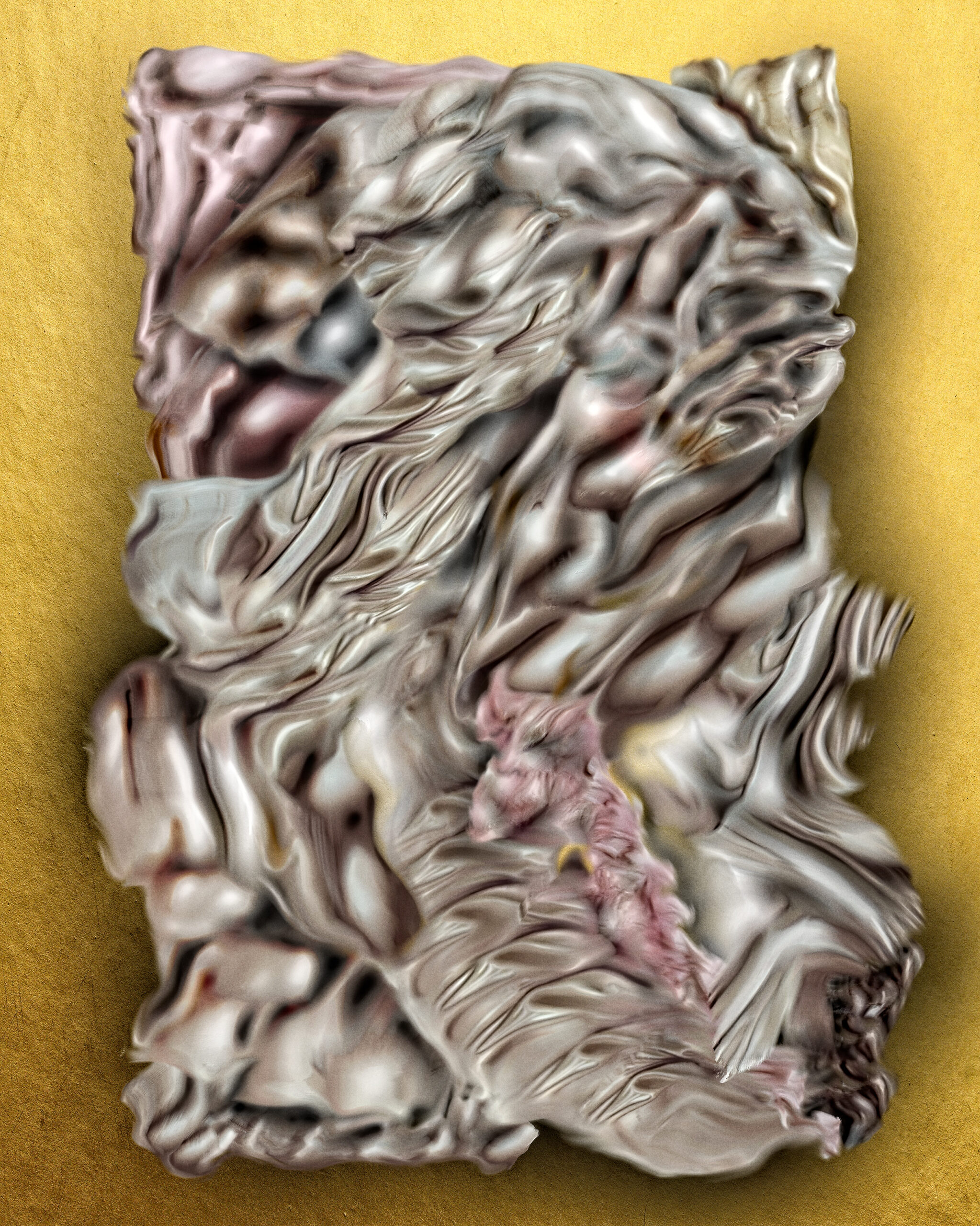
Digital Fragments 401 by Denis Leclerc, abstract artwork with folded pink and silver textures over a gold background, part of the Golden Rule Series.

Digital Fragments 401

Digital Fragments 401

Digital Fragments 401 is part of the Golden Rule Series. In this body of work, I explore movement, texture, and transformation through digital abstraction. Although each piece begins without a plan, it often finds its own rhythm. In this one, the forms seem to shift and pulse, as if suspended between stillness and motion. As a result, light and shadow sculpt the surface, revealing depth in every fold.

At the same time, a golden backdrop introduces a sense of calm. It acts as a quiet contrast to the restless energy of the forms. Moreover, soft pink and silvery tones enhance the sensation of movement. Consequently, the entire composition feels like a living, breathing material, constantly in flux.

Ultimately, Digital Fragments 401 continues my search for balance. I am drawn to spaces where structure dissolves. After all, that is often where the image begins to speak.

Order Your Limited Edition Print

Bring Digital Fragments 401 into your space. This artwork is in three sizes and printed on premium Hahnemühle Photo Rag paper for exceptional depth and vibrancy.